Pet sitter instructions template (free printable)

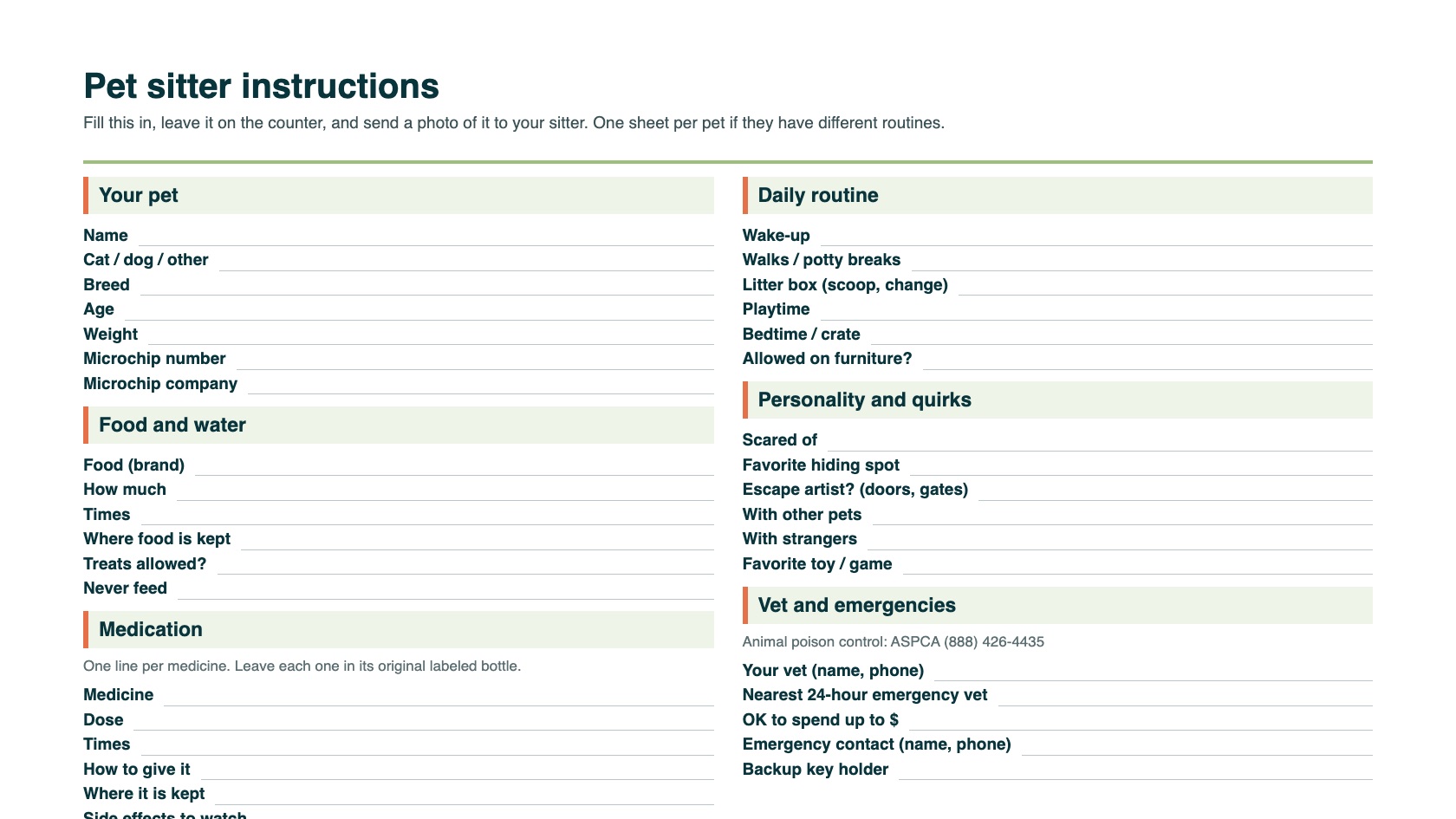
A good pet sitter instructions sheet covers seven things: your pet’s details, food, medication, daily routine, personality, vet and emergency contacts, and house notes. Add a signed note giving your sitter permission to approve vet care up to a set amount. My free one-page template below covers all of it.
Download the free pet sitter instructions template (PDF). Print it, fill it in, leave it on the counter, and send your sitter a photo of it too.
I’ve been pet sitting in Woodland Hills since 2018, and this is the sheet I wish every pet parent left. Your pet already knows the routine by heart. Your sitter is starting from scratch.
What to put in your pet sitter instructions
Write everything down, even the obvious stuff. American Humane puts it plainly: “Write everything down.” Spoken instructions get forgotten, and your sitter can’t ask your pet.
The walkthrough at the door always feels thorough. Then the door closes, and “half a scoop, or was it a scoop and a half?” becomes the only thing anyone remembers.
Vet details and emergency permission
Leave your vet’s name, phone number and address, plus the nearest 24-hour emergency vet. The AKC also recommends a vet authorization covering the care your pet can get if you can’t be reached, “including a spending cap for emergencies,” and at least one trusted person who can make decisions.
“She is very detailed and professional and asked all the right questions and expressed her care for my pups.” Aileen F., February 2019
A vet who works with pet sitters, Melody Conklin, VMD, suggests the authorization also states that you accept financial responsibility, and who decides about ending care if it ever comes to that. The template has a fill-in block for all of this. It’s the least fun box on the page and the one you’ll be gladdest you filled in.
Put the ASPCA Animal Poison Control Center number on there too: (888) 426-4435. The ASPCA notes a consultation fee may apply. Ask your own vet whether they’d like their own consent form on file as well.
Food and medication instructions
Be exact about food. American Humane suggests you “count out the exact portions or cans and set them on the counter or in a clearly labeled bag.” Pre-portioned food leaves no room for guesswork, or for a dog insisting the last sitter gave double.
For medication, list the name, dose and times, and leave it in the original labeled container where you can. Hill’s suggests you show your sitter exactly how you give it, and the AKC says to double-check you have enough for the whole trip. Your cat has strong opinions about pills, and the sitter deserves a heads-up on the technique that actually works.
Routine, quirks and hiding spots
Write down the daily routine: wake-up, walks or potty breaks, litter box, playtime and bedtime. The ASPCA says to keep your sitter informed of your pet’s routine, and for cats to point out “where common hiding spots are around your home.”
Add the quirks. The AKC notes stressed pets may act in ways they wouldn’t if you were home, so “scared of the vacuum” and “bolts at the front door” are gold. So is “barks at the mail carrier, who has done nothing wrong.”


Same instructions sheet, very different routines. One needs walks. One needs you to not look at them.
House notes: keys, alarm, wifi and the breaker box
Your sitter is minding the house too, so give them the basics. The AKC says to “leave a set of keys, even if you have a keypad,” and Vetstreet suggests showing your sitter the breaker box. Add the wifi, the thermostat setting, trash day and any rooms that are off limits.
Share alarm codes and door codes privately, not on a sheet taped to the fridge. The fridge isn’t a vault, however many magnets it has.
Check your microchip details before you go
Write down your pet’s microchip number and the company it’s registered with, then check your phone number on that registry is current. In a study of 53 US shelters, microchipped dogs were returned to their owners at 2½ times the rate of dogs without chips, and cats at 20 times the rate. The most common reason a chipped pet still didn’t get home was an incorrect or disconnected phone number.
A microchip carrying your old number is a very small, very expensive way to phone nobody. Five minutes on the registry website fixes it.
Dog sitter checklist vs cat sitter checklist
The template works for both, but each species has its own extras:
A dog will show your sitter the routine, loudly, at 6am. A cat will let your sitter guess, then judge the guess.
Questions to ask a pet sitter
Before you hand over the keys, a few questions tell you a lot. These come from Care.com’s interview guide, Pet Sitters International and American Humane:
Watch how your pet reacts, too. Your pet can’t read reviews, but they’re an excellent judge of whether someone brought treats.
What I ask before a first booking
Before a first booking, I ask about your pet’s personality, daily routine, feeding schedule, favorite activities and any specific needs, plus an emergency contact and your vet’s details. It’s the same list as the template, and that’s no coincidence.
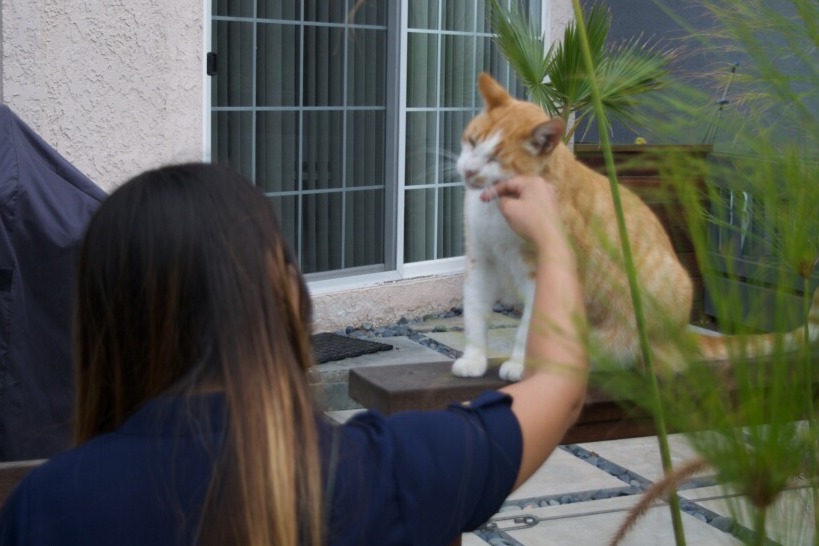
While you’re away, I follow your pet’s usual routine, keep doors and gates secure, and send messages and photos. I do drop-in visits from $17 for cats and $22 for one dog, and overnight pet sitting in your home from $45 a night for cats. On Rover, every sitter has to pass a background check.
Not sure how long your pet can manage on their own? Here’s how long a dog can be left alone and how long a cat can be left alone.